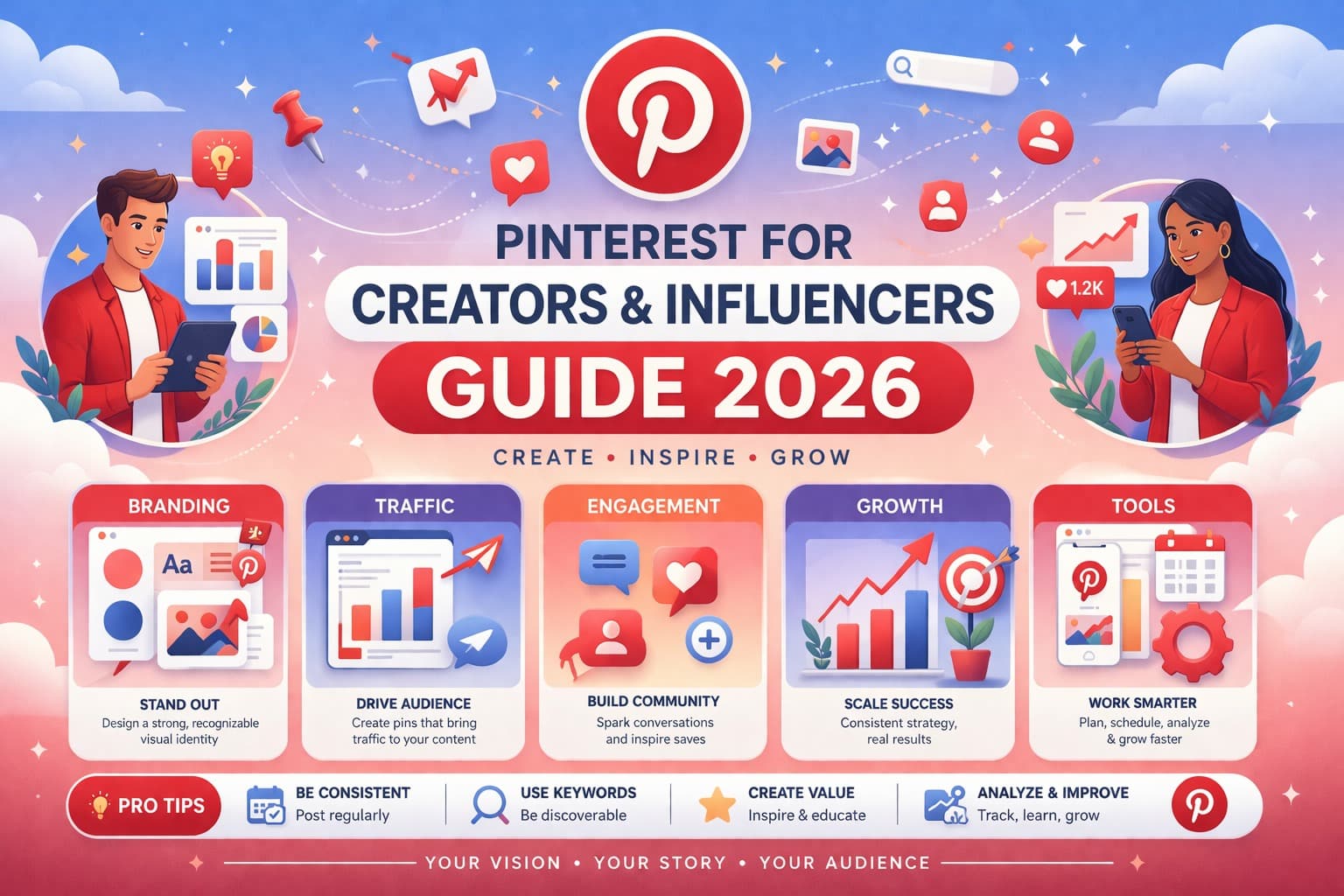
Introduction: The Misunderstanding That Ruins Growth
Most people don’t fail on Pinterest because they lack effort. They fail because they misunderstand the platform.
When someone starts using Pinterest, they usually treat it like Instagram. They focus on making visually attractive posts, hope for engagement, and expect results to come from consistency alone. For a few days, they feel motivated. After a few weeks, when nothing significant happens, they start believing that Pinterest simply doesn’t work anymore.
But the truth is very different.
Pinterest has never been a traditional social media platform. It behaves much closer to a search engine. People don’t open it just to scroll—they open it with intent. They are looking for something specific, whether it’s ideas, solutions, or inspiration.
And that single difference changes everything.
The Real Reason Some Creators Grow Faster Than Others
If you observe creators who grow quickly on Pinterest, you’ll notice something interesting. Their content doesn’t just look good—it answers a very specific need.
They are not randomly posting. They are positioning their content in a way that matches what people are already searching for.
This is why a simple pin like “Easy Morning Routine for Productivity” can outperform a visually better but vague post like “My Daily Routine.” The first one connects with an existing demand, while the second one depends on the user being interested in the creator.
Most beginners don’t realize this early enough. They focus on design, colors, and aesthetics, but ignore intent. As a result, their content looks good but doesn’t perform.
What Actually Happens After You Post a Pin
When you publish a pin, Pinterest doesn’t immediately decide its fate. It starts by testing it.
The platform attempts to grasp the essence of your content by analyzing your title, description, and the text embedded within your image. Armed with this understanding, it then presents your pin to a select group of users who are likely to find the subject matter appealing.
If those users interact with it—especially by clicking or saving—it sends a strong signal that your content is useful. That’s when Pinterest begins to expand its reach.
But if the pin gets ignored, it doesn’t matter how good it looks. It simply fades away.
This is why some pins suddenly gain traction after a few days or even weeks. It’s not random. It’s the result of delayed validation.
The Mistake That Keeps Most Accounts Stuck
One of the biggest mistakes creators make is focusing too much on posting new ideas every time.
They think growth comes from constantly creating something unique. But in reality, growth on Pinterest often comes from repeating what already works—just in a better way.
For example, if a topic like “small business ideas” is already popular, your job is not to invent something completely different. Your job is to present it more clearly, more attractively, or more specifically than others.
The creators who understand this don’t run out of content ideas. They refine and improve existing ones.
Why Consistency Feels Like It Doesn’t Work (At First)
Many people try Pinterest for a few weeks, post regularly, and then quit because they don’t see results.
What they don’t understand is that Pinterest is slow in the beginning, but powerful over time.
Pinterest offers a different experience than Instagram; its content tends to stick around longer. A pin you post now could start to get noticed weeks down the line.
This lag in visibility can trip up those just starting out. They might think their efforts are in vain, when, in fact, their work is still making its way through the system.
The most successful creators aren't always the ones with the most skill. They are the ones who stay consistent long enough for the system to start working in their favor.
How Smart Creators Turn Pinterest Into Traffic
At some point, successful creators stop focusing only on Pinterest itself. They start thinking about where the traffic goes.
Because the real potential of Pinterest is not just visibility—it’s redirection.
When someone clicks on a pin, they are ready to explore more. If that click leads to something valuable, whether it’s a blog, a tool, DIY hacks or a resource, that’s where real growth begins.
If you want to repurpose Pinterest content efficiently, you can use a Pinterest video downloader tool to save and reuse ideas properly. This is also where the right tools quietly make a difference, helping turn that traffic into something more meaningful.
## The Difference Between Random Posting and Strategy
Random posting feels productive, but it rarely leads to results.
Strategy, on the other hand, is quieter. It doesn’t look exciting in the beginning, but it compounds over time.
When you focus on what people are searching, align your content with that intent, and stay consistent, something changes. Your pins stop feeling like isolated posts and start becoming entry points into your content.
That’s when growth becomes predictable.
Final Thoughts: What You Should Actually Focus On
If there’s one thing you should take away from this, it’s this:
Pinterest rewards clarity more than creativity.
You don’t need to be the most original creator. You need to be the most useful one.
Instead of asking what to post next, ask what problem you can solve.
Instead of chasing trends blindly, understand why they work.
And instead of expecting instant results, focus on building momentum.
Because once Pinterest starts working for you, it doesn’t just bring traffic for a day—it keeps bringing it long after you’ve moved on to your next piece of content.