Most beginners approach Pinterest with the wrong expectation. They create a few attractive pins, wait for instant clicks, and assume website traffic will naturally follow. When that doesn’t happen, Pinterest quickly gets labeled as “slow” or “not worth the effort.”
The reality is a little different.
Pinterest is not built around fast engagement cycles. It behaves much closer to a visual discovery engine where users actively search for ideas, tutorials, solutions, and products. That changes how traffic is earned.
If your goal is driving visitors to your website, Pinterest can be surprisingly powerful — but only when your content strategy matches how people actually use the platform.
Understanding How Pinterest Traffic Really Works
On Instagram, users often discover content through people they already follow. Pinterest works differently. Most users arrive with intent.
Someone searches for “home office setup ideas,” “healthy breakfast recipes,” “blogging tips,” or “small business marketing.” They are already looking for something specific. Your content enters the picture only if Pinterest understands that your pin matches that search behavior.
That is why Pinterest traffic usually depends less on popularity and more on relevance. A small creator with a focused strategy can sometimes outperform a larger account posting random content.
This is also why website owners should stop thinking about Pinterest as simply a place to upload graphics. A pin is not the final destination. It is the entry point that moves people toward your website.
Building Content That Deserves the Click
Many people spend hours designing pins while barely thinking about the page users will land on. That approach limits long-term results.
Pinterest traffic becomes stronger when the website content itself solves a clear problem. A user clicking on a pin titled “Pinterest SEO Tips for Beginners” expects practical guidance, useful explanation, and a satisfying reading experience.
If the article feels rushed, vague, or repetitive, traffic quality suffers. Strong Pinterest traffic often starts with stronger website content.
The relationship looks something like this:
| Weak Traffic Strategy | Strong Traffic Strategy |
|---|---|
| Attractive pin, weak article | Attractive pin, valuable article |
| Generic titles | Clear search-focused titles |
| Thin explanations | Useful, readable depth |
| Random publishing | Consistent topical focus |
| Chasing trends only | Solving searchable problems |
Pinterest rewards clarity more than complexity. When your content clearly matches user intent, the platform has an easier job understanding who should see it.
Using Pinterest Search as a Keyword Tool
Many beginners assume keyword research requires expensive software. For Pinterest, that is not always true. The platform itself gives useful signals.
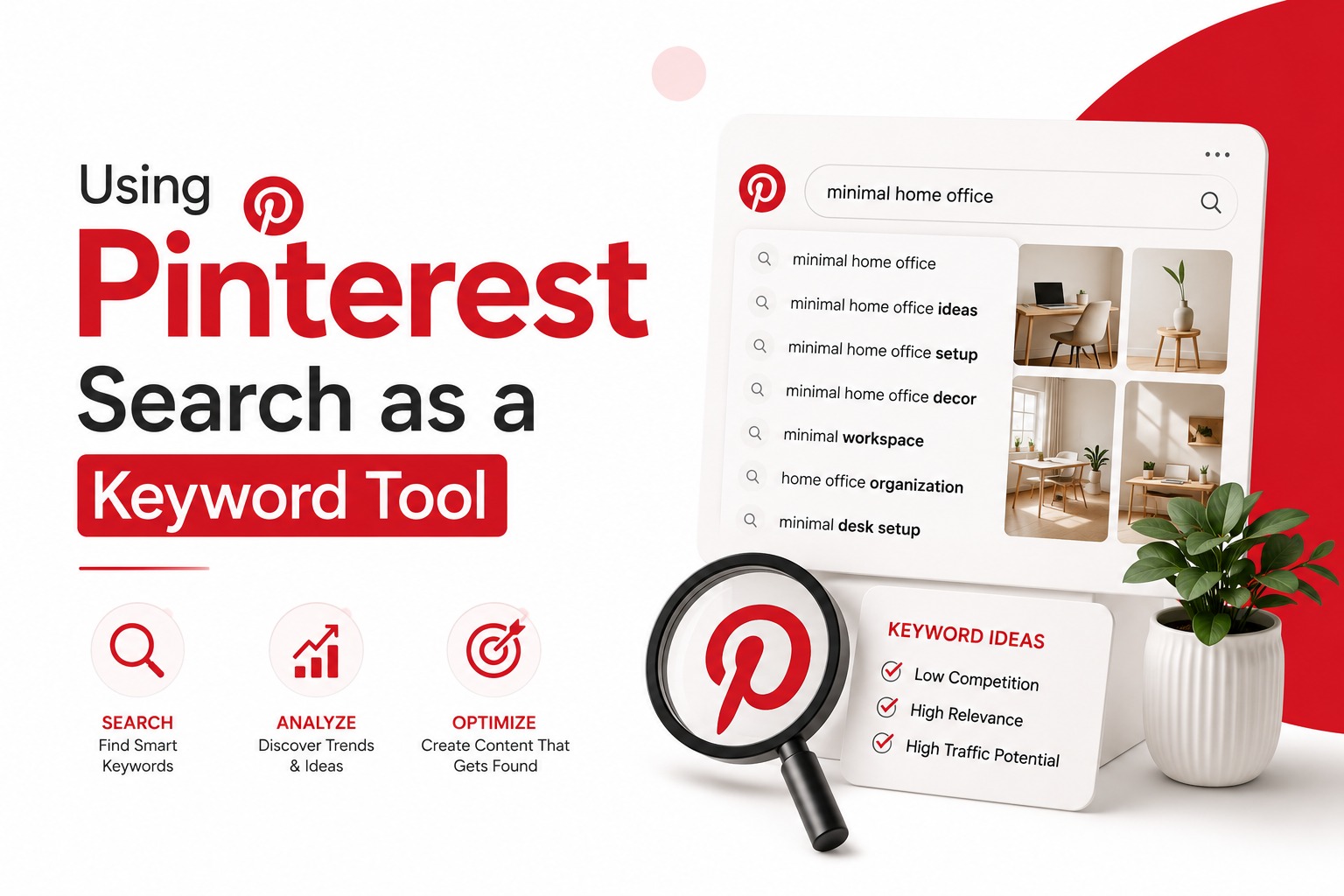
Start typing a topic related to your niche into Pinterest search. You will notice suggested phrases appearing automatically. These suggestions matter because they often reflect what people are actively searching for.
For example, if your niche involves blogging or online growth, typing Pinterest marketing may surface related searches such as: * Pinterest marketing strategy * Pinterest traffic tips * Pinterest SEO * Pinterest marketing for bloggers
These are not decorative keywords. They reveal user language. That language can naturally shape your pin titles, blog headlines, descriptions, and content sections.
The goal is not stuffing keywords everywhere. The goal is helping Pinterest understand exactly what your content is about.
Designing Pins That Encourage Curiosity
A common beginner mistake is designing for aesthetics alone. Beautiful pins are useful. Clear pins are usually more useful.
Pinterest users scroll quickly. Your content has only a short window to communicate value.
Instead of vague wording like: “Grow Faster Online”
a stronger approach would be: “How to Use Pinterest to Increase Website Traffic for Beginners.”
One creates curiosity without context. The other immediately explains the benefit.
Your pin does not need complicated graphics, heavy design effects, or overloaded layouts. Often, clean visuals paired with a clear promise perform better because users instantly understand what they are clicking.
Good Pinterest design is less about artistic perfection and more about communication speed.
Creating Multiple Pins From One Blog Post
One blog post does not need one pin. This is one of the easiest ways beginners limit their own reach without realizing it.
Imagine you publish a blog about website traffic. You could create several completely different pin angles from the same article.
* One version could focus on beginners. * Another could emphasize Pinterest SEO. * A third could highlight common mistakes. * A fourth could use a curiosity-driven headline.
The destination stays the same. The entry point changes.
This matters because Pinterest users search from different perspectives. Multiple pin variations increase the chances that one version aligns with how someone is thinking, searching, or browsing at that moment.
Why Consistency Matters More Than Viral Moments
Pinterest growth can feel quiet in the beginning. That sometimes frustrates new users because other platforms train people to expect instant feedback. Pinterest rarely behaves like that.
A pin may take time to gain traction. Search visibility often develops gradually. Traffic can build slowly before becoming more consistent months later.
This delayed momentum surprises beginners, but it is also part of what makes Pinterest interesting from a website traffic perspective.
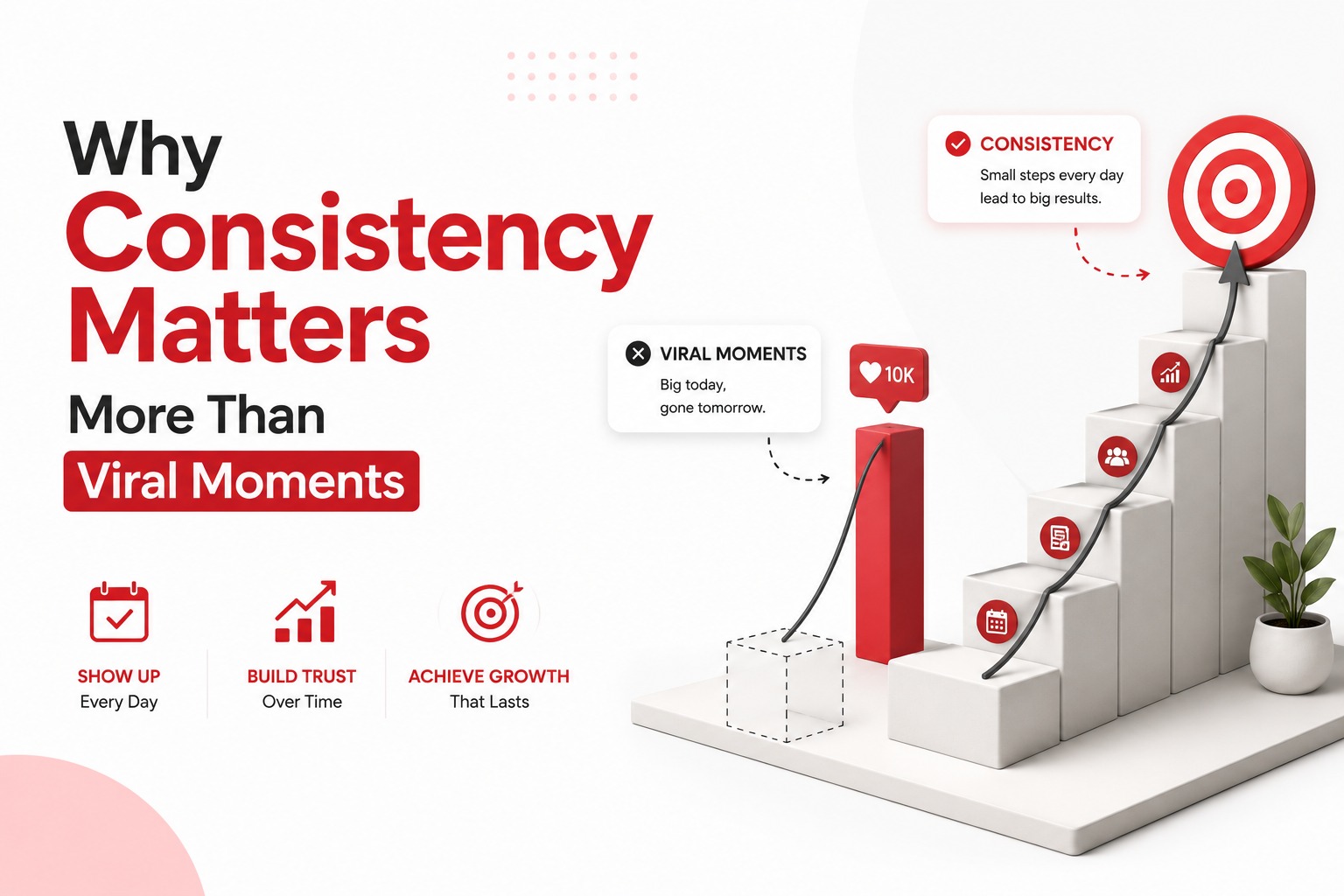
Unlike short-lived social posts, Pinterest content can continue generating clicks long after publishing. That is why consistency often matters more than occasional bursts of activity.
Publishing strategically over time helps Pinterest understand your topics, your audience, and your content focus. You do not need an aggressive schedule. You need sustainable consistency.
Thinking Beyond Clicks: Building a Traffic System
Getting clicks is useful. Building a repeatable traffic system is better.
Pinterest works best when your content ecosystem supports the entire user journey.
1. A searcher discovers your pin. 2. The pin leads to a genuinely useful article. 3. The article provides enough value to encourage deeper browsing, newsletter signups, resource downloads, product exploration, or return visits.
This is where website traffic becomes more meaningful. The goal is not simply increasing numbers inside analytics dashboards. The goal is attracting visitors who actually engage with what you create.
Pinterest can support that process exceptionally well because users often arrive with curiosity already activated.
Final Thoughts
Using Pinterest to drive traffic to your website is not about gaming an algorithm or uploading endless graphics.
It is about understanding search behavior, creating content that genuinely answers questions, designing clearer entry points, and giving Pinterest enough consistency to recognize what your website represents.
The good news for beginners is that you do not need a massive audience to make this work.
You need relevance. You need useful content. And you need a strategy built around how Pinterest users actually discover information.
When those pieces start working together, Pinterest stops feeling like another social platform — and starts functioning like a long-term traffic source that keeps working long after you hit publish.